
University of Granada · Department of Theoretical Physics and Cosmology
Group of Stellar Evolution
and Nucleosynthesis
From the pulsations of δ Scuti and γ Doradus stars to the structure of their interiors: we use asteroseismology, space photometry and stellar modelling to understand how stars live and evolve.
- publications
- 337
- citations
- 10,858
- members
- 6
- countries with collaborators
- 45
Bibliometric data from NASA ADS
About Us
We study stellar structure and evolution through asteroseismology, the analysis of stellar oscillations. Our main focus is on pulsating stars in the classical instability strip, especially δ Scuti and γ Doradus stars, whose frequencies — measured by space missions such as CoRoT, Kepler and TESS, and soon PLATO — reveal their internal structure, rotation, mean density and age. We combine the analysis of these observations with the computation of stellar models and their theoretical oscillation spectra, and we also work on stellar nucleosynthesis and on the characterization of stars that host exoplanets.
What we do
Research lines
δ Scuti Stars and the Instability Strip
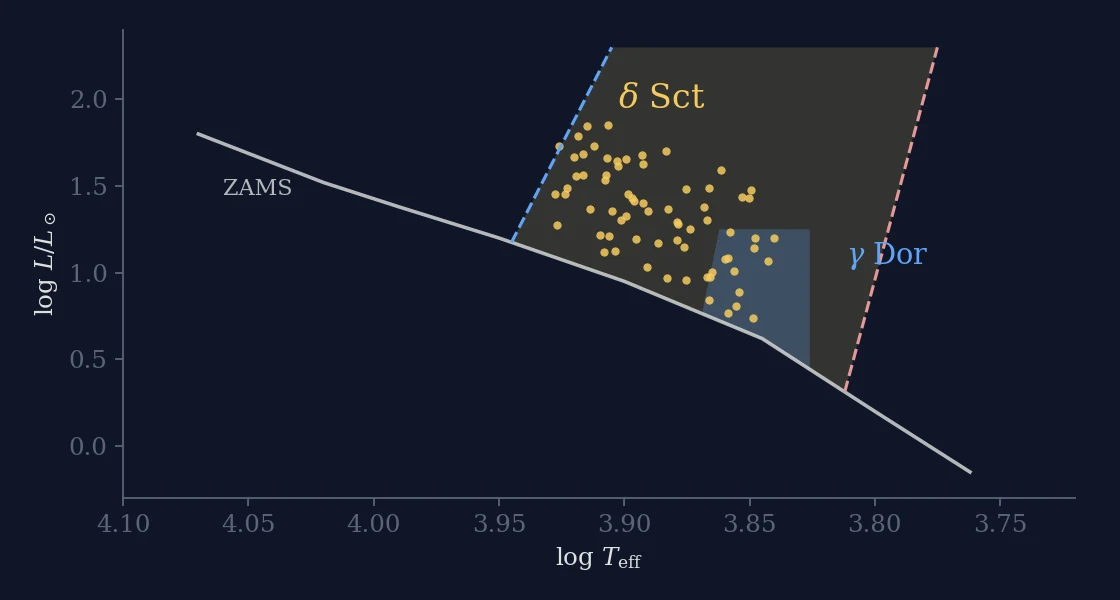
δ Scuti stars are A–F-type stars of about 1.5–2.5 M⊙ located where the classical instability strip crosses the main sequence. The κ mechanism operating in the He II partial ionization zone drives their low-order pressure (p) modes, with periods between roughly 15 minutes and 8 hours. We study which modes are excited, and why, across the strip.
The Large Separation
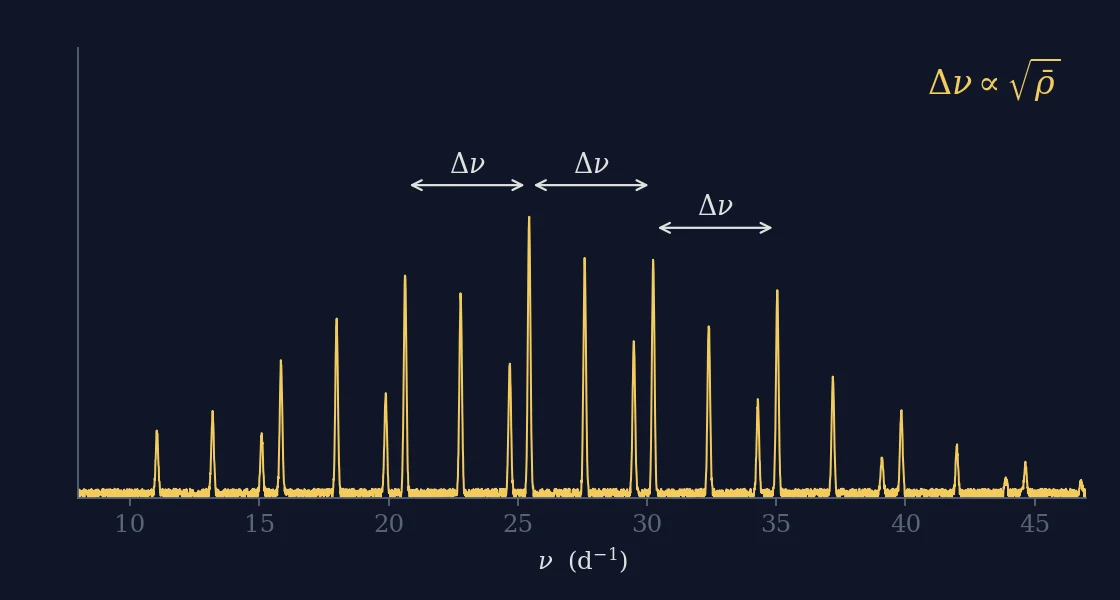
Modes of the same angular degree and consecutive radial order are separated in frequency by the large separation, Δν, which scales approximately with the square root of the stellar mean density. A similar regular pattern also appears in the low-order regime of δ Scuti stars, and we use it to estimate their mean density directly from the observed frequencies.
Internal Structure and Rotation
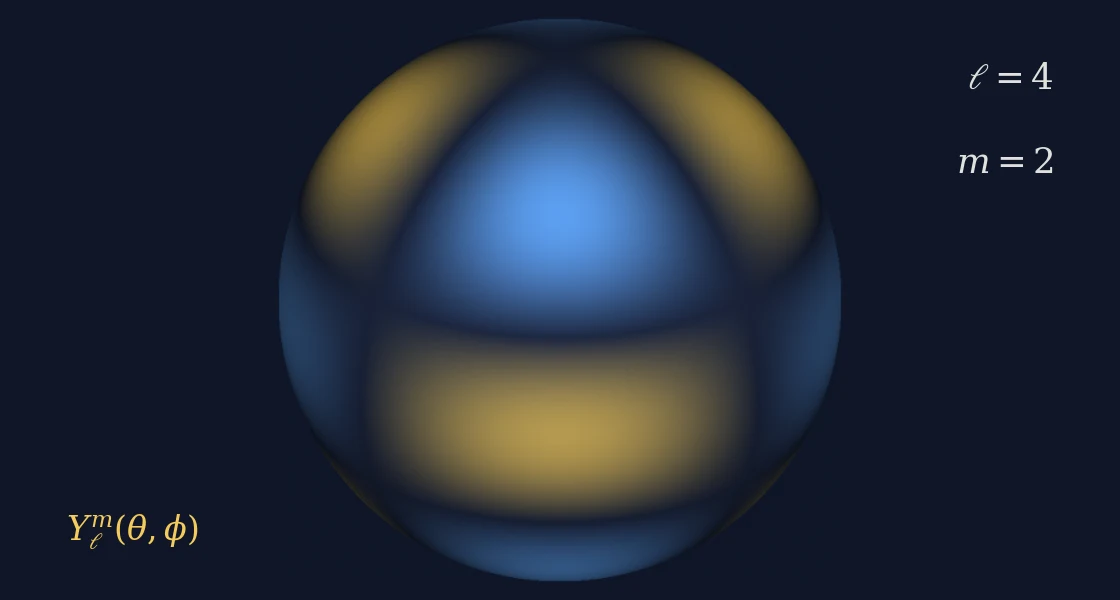
Each oscillation mode probes a different region of the stellar interior. We compute evolutionary models and their theoretical oscillation spectra and compare them with observed frequencies to constrain convective-core overshooting, chemical mixing and age. Many δ Scuti stars rotate rapidly, which deforms the star and perturbs its spectrum, so rotation must be accounted for to identify modes reliably.
γ Doradus and Hybrid Pulsators
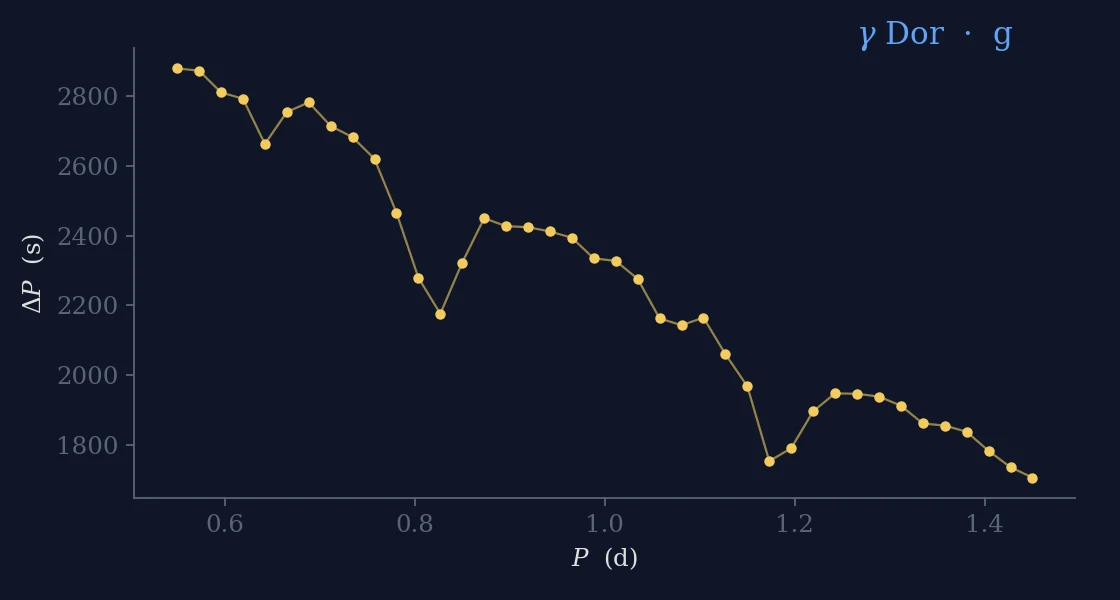
γ Doradus stars, slightly cooler than δ Scuti stars, pulsate in high-order gravity (g) modes that probe the regions next to the convective core and are highly sensitive to rotation and chemical gradients. Hybrid stars, which show both p and g modes, allow us to study the envelope and the deep interior of the same star.
Space Photometry
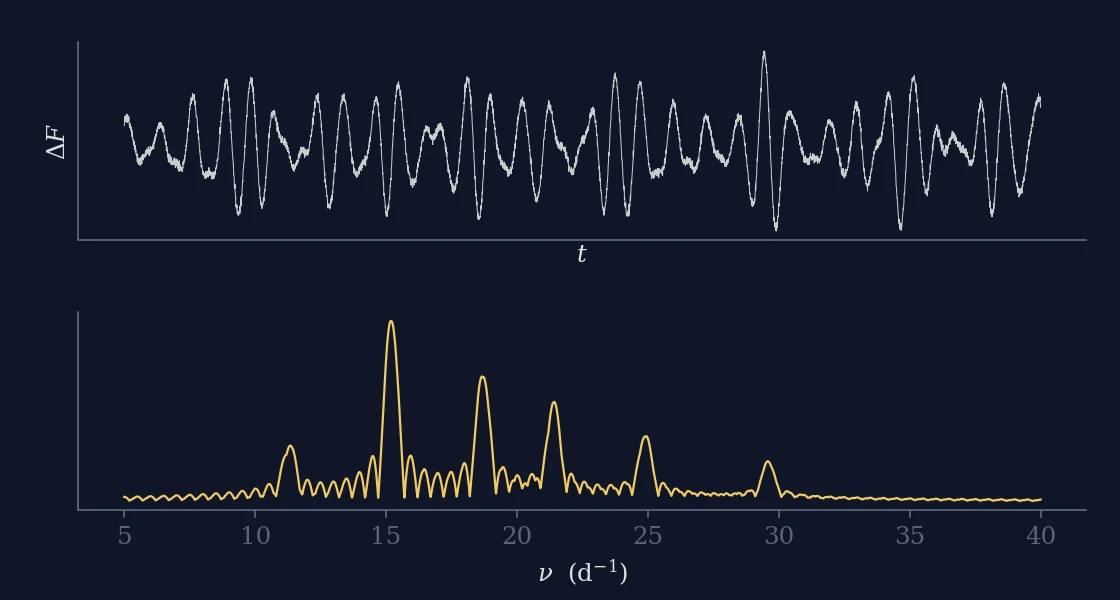
Space missions deliver long, almost uninterrupted light curves with parts-per-million precision, revealing from dozens to hundreds of pulsation frequencies per star. We analyse data from CoRoT, Kepler and TESS, and are preparing the scientific exploitation of ESA’s PLATO mission.
Asteroseismology and Exoplanets
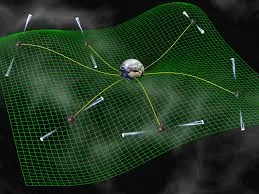
Asteroseismology provides precise stellar radii, masses and ages, which in turn determine the properties of the planets orbiting those stars. We also study how stellar pulsations must be modelled and filtered out in order to detect and characterize transiting planets.
Nucleosynthesis in AGB Stars
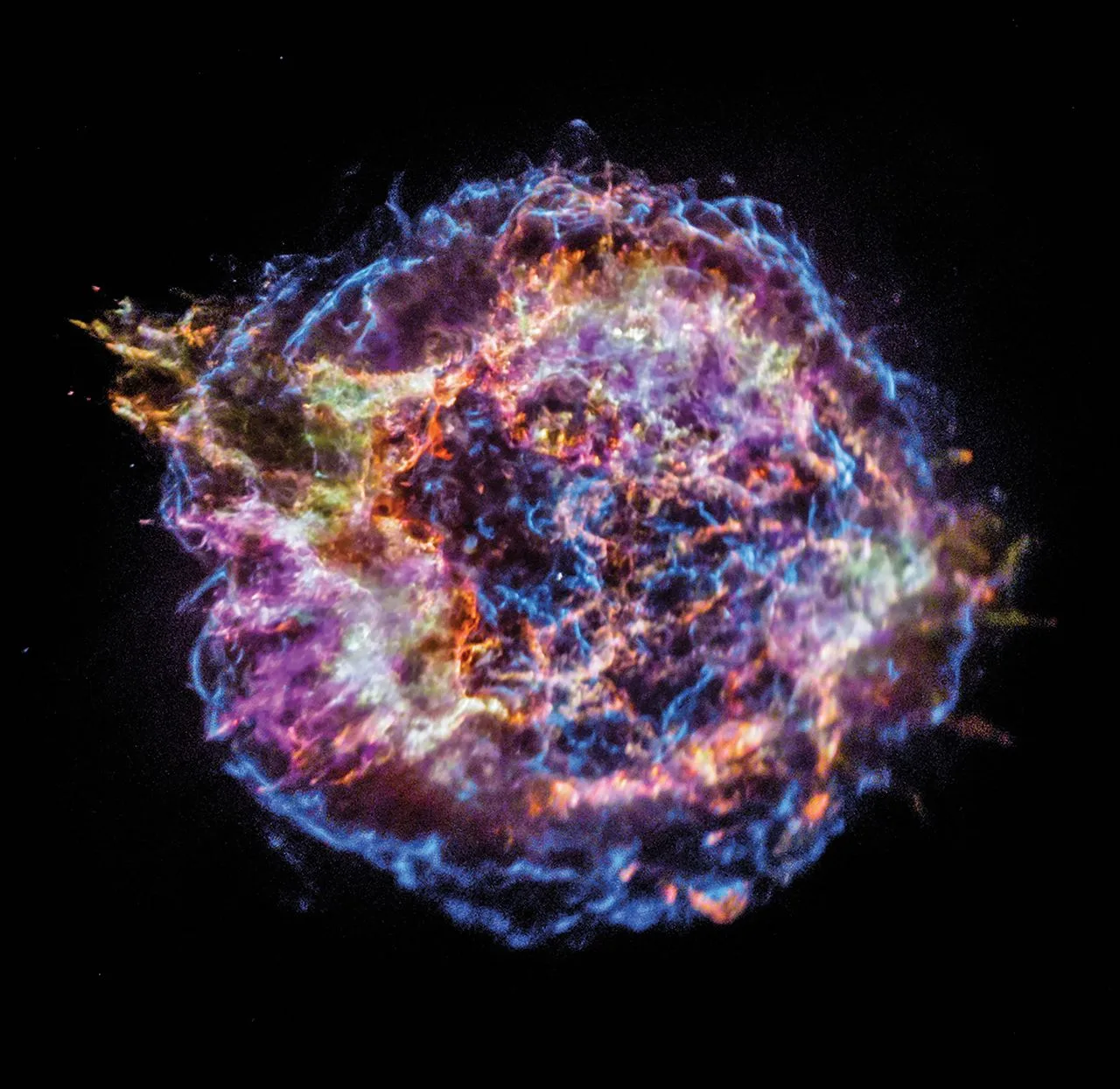
We study the asymptotic giant branch (AGB) phase — thermal pulses, third dredge-up and mass loss — as the main site of s-process nucleosynthesis and a major source of interstellar dust.
Infrared Astronomy from Antarctica
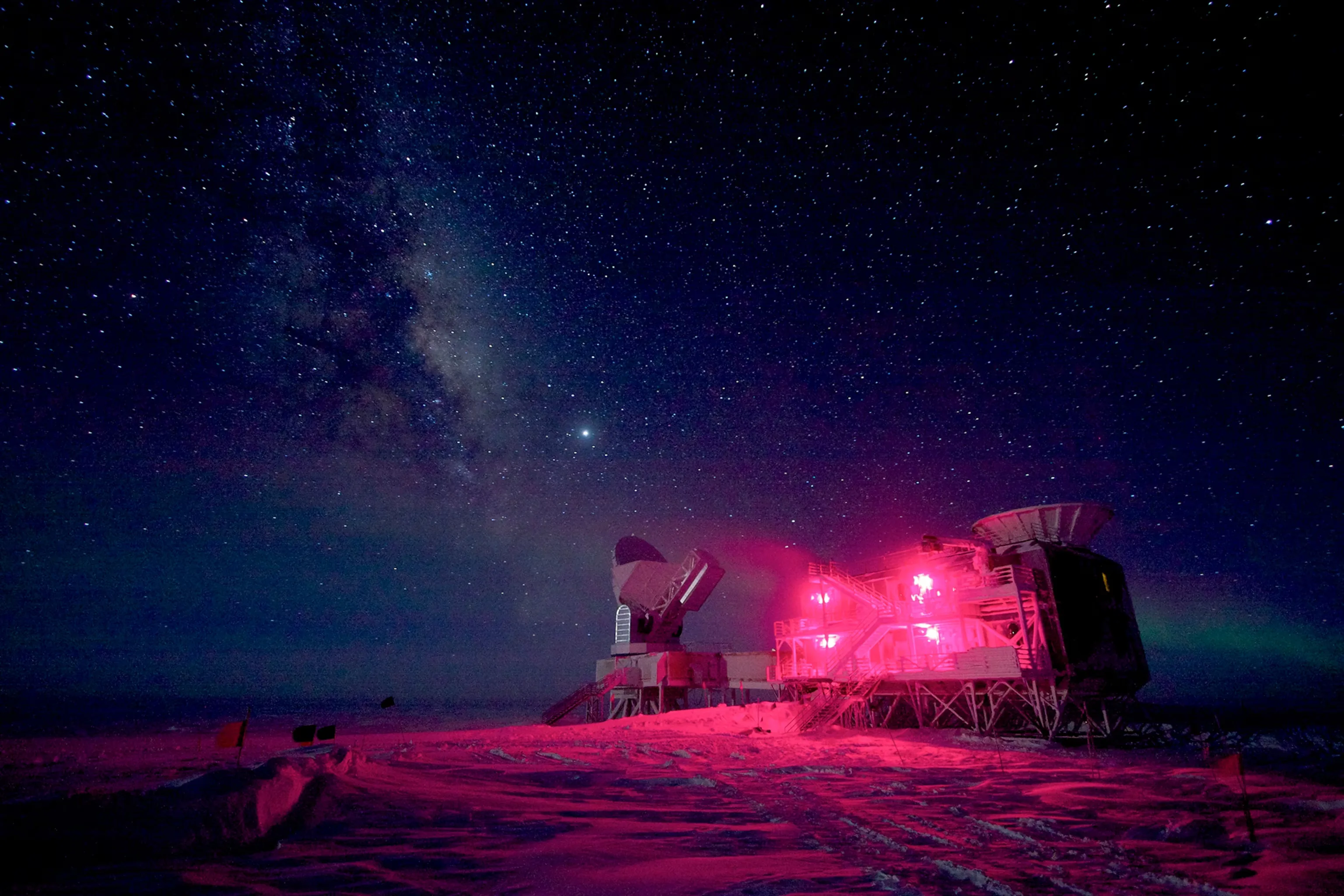
We exploit the exceptional atmospheric conditions of the Antarctic plateau for infrared observations, targeting evolved stars and circumstellar dust that are best probed at these wavelengths.